Brave New World
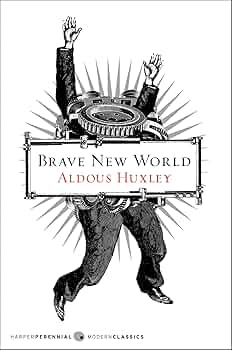
Summary
Brave New World has to be one of my favorite books I have read. It explores the ideas of conformity in a dystopian, hierarchical society. The references to the period are rich, including classic British nursery rhymes. This book was ahead of its time.
Some of the chapters make use of interesting cinematic techniques; such as disorienting shifts in perspective to symbolize the confusing nature of the world which Aldous Huxely built.
Would recommend.
Why I Read This
I was drawn to this book by my interest in the novel 1984 by George Orwell. According to Google Gemini:
“George Orwell and Aldous Huxley were ==20th-century literary contemporaries and acquaintances==—with Huxley having taught French to a young Orwell at Eton—who both crafted iconic dystopian novels, Nineteen Eighty-Four (1949) and Brave New World (1932). Despite mutual respect, they diverged on their visions of the future: Orwell feared a brutal, boot-on-the-face dictatorship, while Huxley predicted a more efficient, pleasure-driven tyranny.”
- Contrasting Visions:
- Orwell (1984): Focused on coercion, surveillance, and the destruction of information to maintain power.
- Huxley (Brave New World): Focused on technological conditioning, pleasure, and drugs (soma) to make people “love their servitude.””